Reference sheet · ASME B16.34 pressure classes
The pressure-class reference sheet.
A class marking is an envelope, not a number. This sheet is the envelope, tabulated.
ASME pressure classes (Class 150, Class 300, Class 600 and higher) define a valve's pressure-temperature envelope, not a single working pressure. Allowable pressure falls as temperature rises and depends on the body material group, as tabulated in ASME B16.34. This reference sets out the common classes, how ratings derate with temperature, and what to check before matching a class to your line. Your purchase order's edition governs.
What a pressure class is, and is not
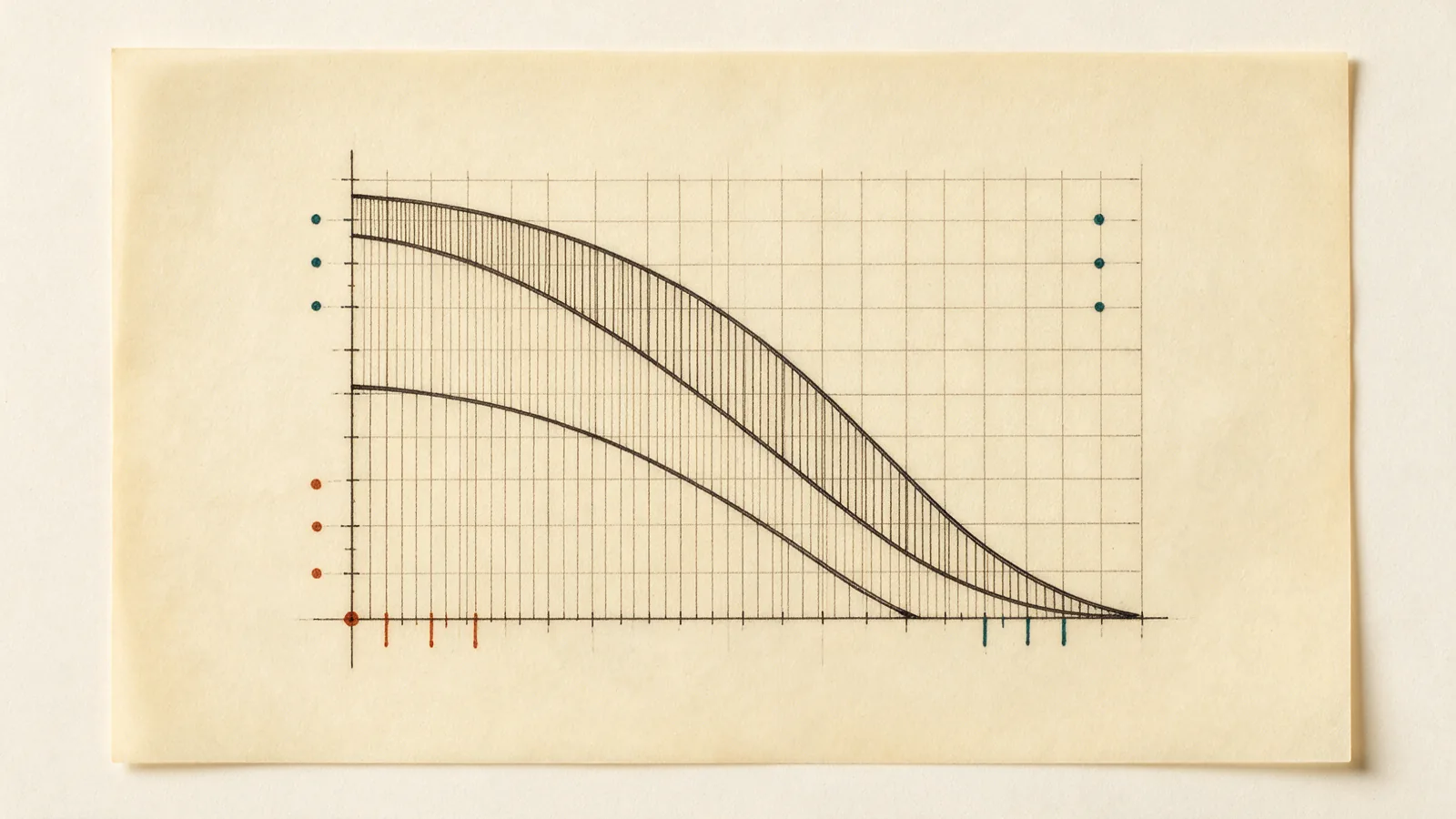
Class 150 does not mean 150 of anything you can put a gauge on. A pressure class is a designation that indexes a whole pressure-temperature curve: for each body material group, ASME B16.34 tabulates the working pressure a valve of that class may carry at each temperature, and the flange standard ASME B16.5 does the same for the flanges it bolts to. The class is the family name for that curve. The actual permission is always a pair, pressure at temperature, for a stated material.
Read it as an envelope. Cold, a Class 150 carbon-steel body carries far more than its name suggests; hot, far less. The mistake the class system exists to prevent is quoting a single “rating” with the temperature left off.
The common classes
The ladder most piping specifications climb is Class 150, 300, 600, 900, 1500 and 2500, with Class 400 appearing occasionally between 300 and 600. Utility water, air and low-pressure process lines sit in Class 150; general hydrocarbon and steam duty fills Classes 300 and 600; wellhead, injection and high-pressure gas service climbs to Class 900 and beyond. The class an enquiry states comes from the piping class of the line (the specification’s own tabulation of design pressure and temperature), not from the valve catalogue. One class runs through a whole line: valve, flanges and fittings carry the same designation so the weakest point is designed, not discovered.
How temperature derates the rating
The table below is the envelope itself: working pressure in bar for carbon-steel bodies, ASME B16.5 / B16.34 material Group 1.1, from ambient to the top of the carbon-steel range. Read down a column and the class sheds capacity as steel loses strength with heat: every class carries most near ambient and least at the top row’s temperatures.
All eight classes: scroll →
| °C | 150 | 300 | 400 | 600 | 900 | 1500 | 2500 |
|---|---|---|---|---|---|---|---|
| −29 → 38 | 19.6 | 51.1 | 68.1 | 102.1 | 153.2 | 255.3 | 425.5 |
| 100 | 17.7 | 46.6 | 62.1 | 93.2 | 139.8 | 233.0 | 388.3 |
| 200 | 13.8 | 43.8 | 58.4 | 87.6 | 131.4 | 219.0 | 365.0 |
| 300 | 10.2 | 39.8 | 53.1 | 79.6 | 119.5 | 199.1 | 331.8 |
| 400 | 6.5 | 34.7 | 46.3 | 69.4 | 104.2 | 173.6 | 289.3 |
| 425 | 5.5 | 28.8 | 38.4 | 57.5 | 86.3 | 143.8 | 239.7 |
| 450 | 4.6 | 23.0 | 30.7 | 46.0 | 69.0 | 115.0 | 191.7 |
| 500 | 2.8 | 11.8 | 15.7 | 23.5 | 35.3 | 58.8 | 98.0 |
| 538 | 1.4 | 5.9 | 7.9 | 11.8 | 17.7 | 29.5 | 49.2 |
Reference values for specification. Confirm against the current edition of the standard and the valve manufacturer's own rating before purchase.
Group 1.1 covers common carbon-steel body grades. Other material groups (stainless, alloy, low-temperature) carry their own tables in the standard; intermediate temperatures are handled per the standard’s own rules, and the governing edition is the one your purchase order names.
Material groups in brief
The class system is material-indexed: the same Class 300 marking permits different pressures on a carbon-steel body, a stainless body and an alloy body, because each material group keeps its strength differently as temperature rises. Group 1.1 (the table above) collects the common carbon-steel grades. Stainless groups typically start lower near ambient but hold usefully further into high temperature; low-temperature grades exist so the rating remains valid below the ambient design range. The practical rule for an enquiry is that class and body material are one decision, not two. State them together, and the valve’s nameplate will carry both, as explained in reading a valve nameplate.
Class versus PN designations
European-line specifications rate by PN (PN 10, PN 16, PN 25, PN 40), a nominal pressure designation from the EN flange system, and the two ladders do not translate rung for rung. A PN number looks like a working pressure but is still an index into its own pressure-temperature tables, and PN flange drillings do not mate with class drillings at the same nominal size. Treat the systems as separate languages: a line specified in PN is answered in PN, a line specified in class is answered in class, and any conversion between them is a piping-engineering decision made against both standards, never a substitution made at the counter because the numbers look close.
Checking a class against your line
The check takes one minute with the line conditions in hand. Take the design temperature (not the operating temperature) and the design pressure from the piping specification; find the temperature row for the body material group; and confirm the class column at that row meets or exceeds the design pressure. If it does not, move up a class or change the material group. Then put all of it on the enquiry: class, material, size, end connection, operator and certificates. The full sequence from line conditions to order is the specifying guide, and the pressure-class memo works a buyer’s example. The counter quotes to the class you state, by phone, email or WhatsApp from Subang Jaya.