Comparison sheet · the quarter-turn pair
Ball valve vs butterfly valve.
Both close in a quarter turn. What separates them is what stays in the flow, and what the installed metre of pipe costs.
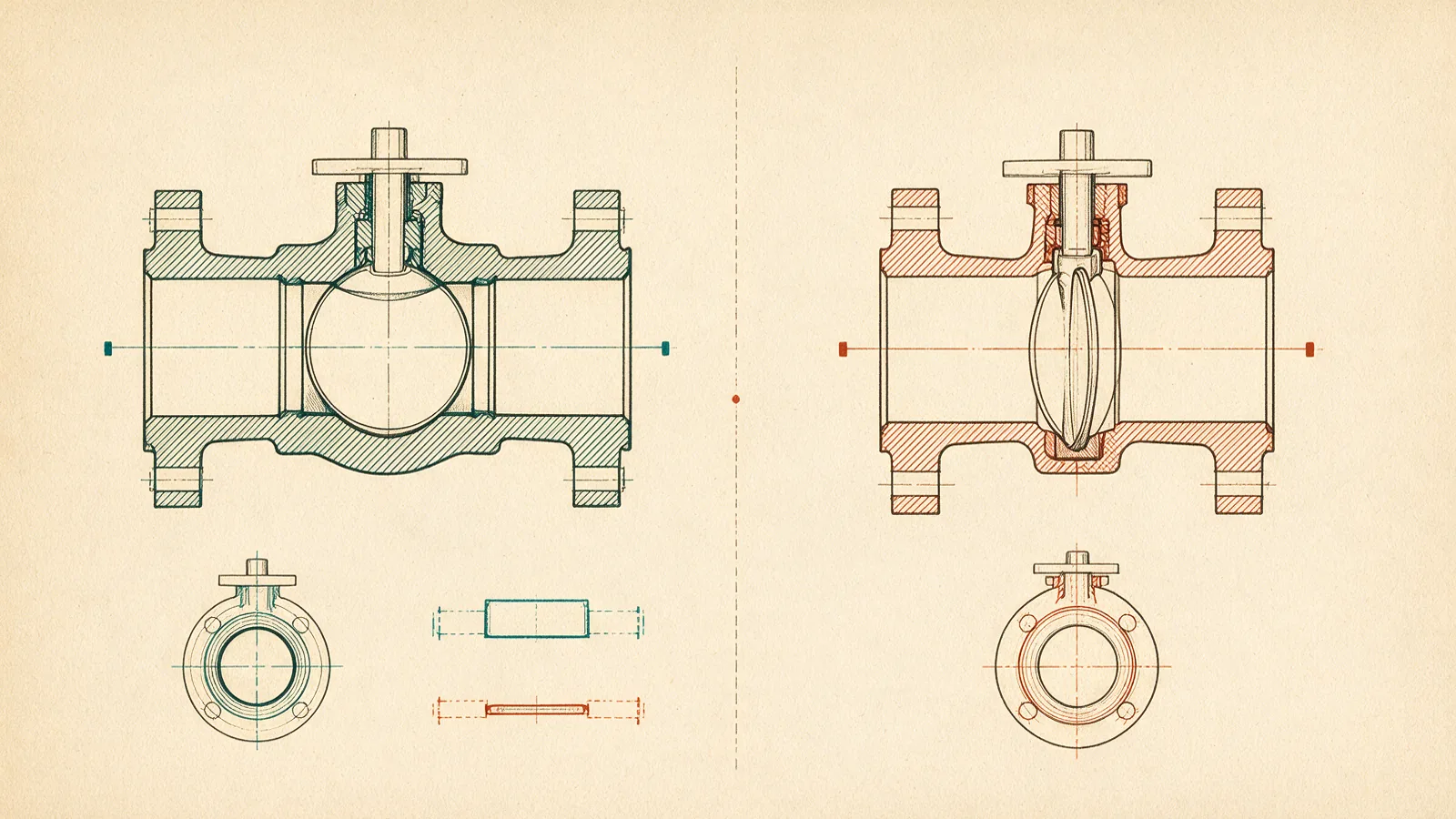
Butterfly wins on large diameters, weight and economical isolation; ball wins on tight shutoff, pigging and higher pressure classes. A butterfly disc stays in the flow path, so some pressure drop is permanent. A full-bore ball passes flow unobstructed. This sheet compares body patterns, shutoff, torque, installed cost and where Malaysian services use each.
The one-line rule
Shutoff decides for the ball; diameter decides for the butterfly. Where shutoff is the point, price the ball valve; where the diameter is the point, price the butterfly valve. Both close in a quarter turn, so the choice is settled at the ends of the duty range. High pressure classes, pigged lines and bubble-tight isolation pull towards the ball. Large bores, cooling water and tank farms pull towards the butterfly. The reasoning follows, then the table.
Bore and flow path compared
Open a full-bore ball valve and the fluid cannot tell it is there. The port lines up with the pipe, giving the lowest resistance of any common pattern, and a passage that pigs traverse. The butterfly cannot offer that: its disc pivots on a stem through the bore, so even fully open the edge sits in the stream. The pressure loss is permanent, modest but never zero. Reduced-bore balls trim weight and cost while keeping the seat geometry, so say which bore is meant on the enquiry.
Shutoff and seat design
The ball closes against seats that wrap the port. Soft-seated designs seal bubble-tight, and trunnion patterns hold that seal at high differential pressure; mounting choice is its own memo. The butterfly seals along the rim of its disc. Resilient-lined bodies grip the disc edge in an elastomer and shut off tightly at moderate duty; offset designs carry the pattern into hotter, higher-class service. Fire-safe and seat-material questions apply to both. Where a specification names a fire-test standard, repeat it on the enquiry: see the fire-safe memo.
Weight, footprint and installed cost
At the same nominal size the argument makes itself. The ball is a solid body with a machined sphere inside it; the butterfly is little more than a ring, a disc and a stem. As diameter grows, the gap grows faster. The sphere gains mass steeply, while the wafer or lug body stays a slim disc-holder that bolts between existing flanges; the styles are compared in their own memo. Weight is also structure: on racks, tank tops and offshore, the lighter valve saves steel around itself. That is why economical large-bore isolation defaults to the butterfly.
Torque and actuation
A quarter turn is easy to automate, which is why both patterns dominate actuated isolation. Small sizes take a lever; larger sizes take a gearbox or an actuator, and the mounting pad is standardised, so the enquiry only needs to name the operator. Seating torque differs: the ball works against seat friction under pressure, the butterfly against its liner’s grip and disc loads. Size the actuator from the manufacturer’s torque data for that valve, trim and differential pressure. State the service conditions and let the data answer.
The comparison table
Seven lines, qualitative on purpose. Size, class and seat material move every number, so the numbers belong on the quotation.
Full comparison, scroll →
| Factor | Ball valve | Butterfly valve |
|---|---|---|
| Geometry | Bored sphere between wrapped seats | Disc pivoting on a stem in the bore |
| Flow path | Straight through: full bore, piggable | Disc stays in the stream when open |
| Shutoff | Bubble-tight, holds high differential | Tight in resilient designs at moderate duty |
| Weight & footprint | Heavy: grows steeply with size | Light: slim wafer or lug body |
| Torque & actuation | Seat friction sets the torque | Liner grip and disc loads set it |
| Typical duty | Pigged, pressured, tight-shutoff lines | Large-bore water, terminal and utility duty |
| Relative cost basis | Higher: rises fast with diameter | Lower, especially at large bore |
Qualitative comparison for pattern selection only. Ratings, torques and seat limits come from the governing standards and the manufacturer’s data for the valve quoted. Confirm against the current edition; your purchase order governs.
Which to enquire for
State the duty and the bore and the pattern usually declares itself. Where it could go either way, ask for both prices on one quotation and let installed cost decide. Either way the enquiry states the same six things: size, pressure class, end connection, body and seat material, operator, and the tests and certificates required. The full checklist is on specifying industrial valves. NF Teguh quotes both patterns across power plant, petrochemical, oil and gas, terminal, offshore and natural gas service. The route from list to delivery is on how ordering works, and the counter answers by phone, email or WhatsApp.