Valve family 06 / 06 · self-acting non-return
The check valve.
No handwheel, no lever. The line’s own flow opens it, and the line’s reversal shuts it.
- Motion
- None: opened by the flow itself
- Duty
- Stops reverse flow after a pump
- Care
- Slam on rapid reversal: size it
- K
- ≈ 2 swing pattern (reference only)
A check valve opens with forward flow and closes by itself when flow reverses. It protects pumps, compressors and meters from backflow. Swing, dual-plate and piston patterns trade off pressure drop, closing speed and installed length. NF Teguh supplies check valves in the patterns and materials that Malaysian power, petrochemical, oil and gas, terminal, offshore and natural gas services call for.
How a check valve works
The check valve is the one family on this site with no operator at all. Forward flow pushes the closure member (a hinged disc, a pair of plates, a piston) off its seat and holds it open. When flow stalls and reverses, gravity, springs and the reversing stream drive it shut. Its whole job is to make flow a one-way street: a stopped pump cannot spin backwards, and a header cannot drain into a dead machine.
Nobody strokes it, so nobody chooses its position either. The line conditions do. That changes the selection question: not how the valve opens, but how quickly and gently it closes. The three patterns below are three answers to that one question.
Swing, dual-plate and piston patterns
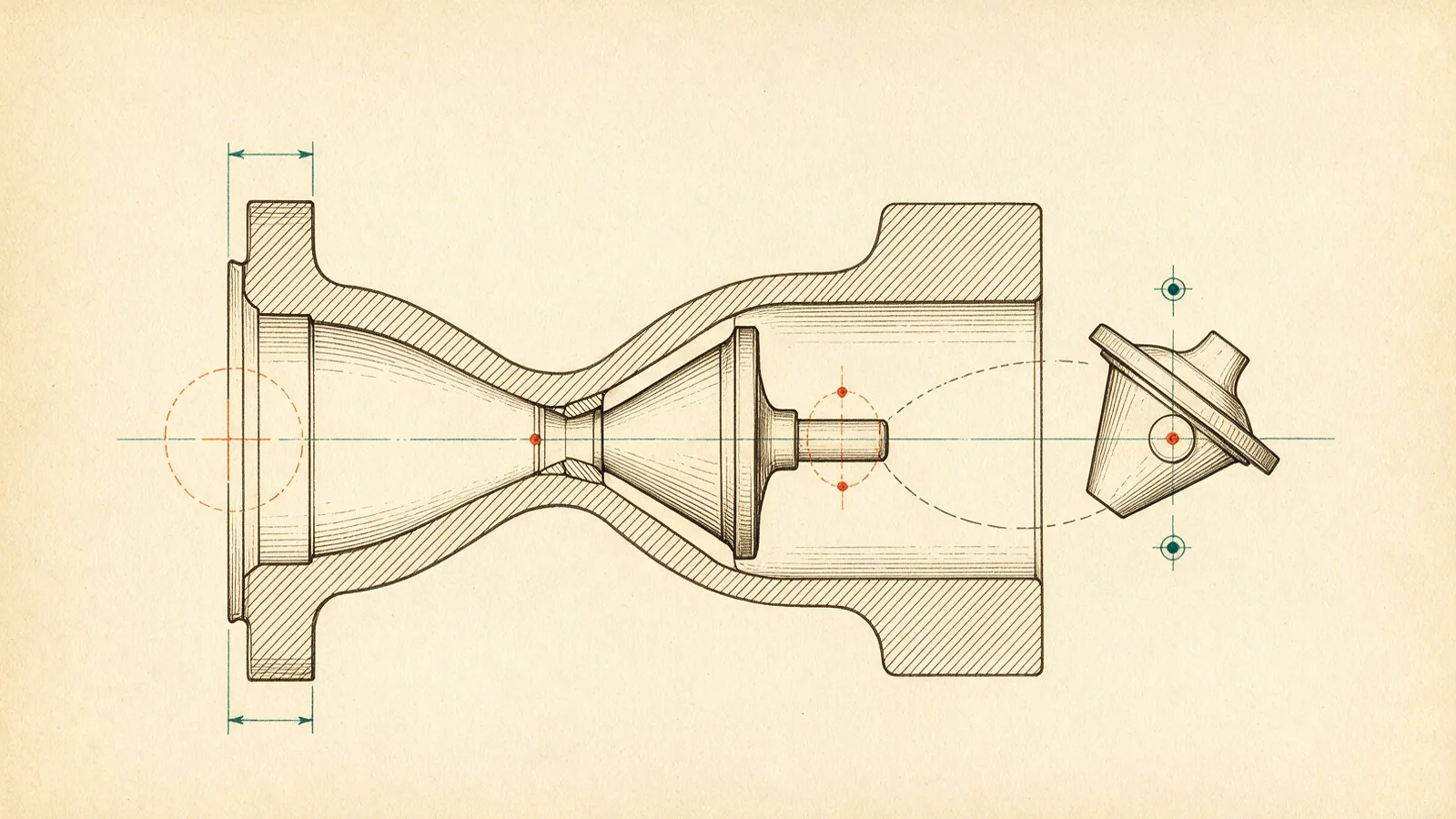
The swing check hangs its disc from a hinge at the top of the bore. Flow swings it up and clear, so the open valve flows nearly as freely as a pipe. The disc’s long travel makes it the slowest to close. The dual-plate pattern folds two spring-loaded half-discs into a short wafer body: light, compact and quick, with the springs starting the plates home before reverse flow builds. The piston and axial patterns move a disc or piston along the pipe axis over a short, often spring-assisted travel. They are the fastest-closing and steadiest of the three, at the price of a more resistant flow path.
Travel distance, closing speed and pressure loss trade against each other across all three. The full selection logic, pattern by pattern, is in check valve types: where each fits.
Slam, and how to avoid it
Stop a pump and the column of liquid it was driving coasts, stalls and falls back. If the disc is still travelling when that reverse flow arrives, the stream snatches it shut. The disc slams the seat, the column stops dead, and the pressure spike hammers through the pipework. Slam is not a defect in the valve. It is a mismatch between how fast the line reverses and how fast the disc can close.
The cures follow from that. Fast-reversing systems (parallel pumps, tall discharge lines) want short-travel, spring-assisted patterns that shut before reverse flow exists. Every pattern wants honest sizing. A valve that normal flow barely lifts flutters against its seat and wears; one held fully open closes from the worst position. State the real flow range on the enquiry, not just the pipe size.
Orientation and installation limits
Gravity is part of a check valve’s mechanism, so the pattern dictates where it may be installed. A swing check relies on its disc hanging closed: horizontal runs suit it, vertical lines only with flow upward, never where the disc would hang open. Spring-loaded dual-plate and piston patterns are freer, since the spring closes them. Each maker still states the permitted orientations. Check the installation drawing against them, not against habit.
Position along the line matters too. Close behind an elbow or pump discharge, swirling flow rocks the disc and wears the hinge. A straight settling length upstream lets the disc open steadily and close square. State where the valve will sit: horizontal or vertical, flow direction, what is immediately upstream. The counter can then flag a mismatch between pattern and position before it is bolted in.
Standards a check valve enquiry usually names
API 598 governs the shell and seat testing a check valve passes before despatch. Seat tightness for a non-return is tested to the same discipline as any isolation valve. Pipeline service orders against API 6D, which covers non-return valves alongside the block valves of a transmission system. Class markings trace to ASME B16.34, tabulated in the pressure class reference. Material certificates to EN 10204 are named on the order like any other line.
Designations are published reference data, not a claim about any particular valve. The governing edition is always the one your purchase order names. Confirm ratings against the manufacturer’s data for the size and pattern quoted.
What to state on a check valve enquiry
NF Teguh supplies check valves from Subang Jaya into Malaysian power, petrochemical, oil and gas, terminal, offshore and natural gas services. Six lines make the enquiry quotable first time:
- Size & pressure class
- End connection: flanged, wafer, butt-weld
- Body & trim material
- Pattern (swing, dual-plate or piston) and installed orientation
- Service: fluid, flow range, what sits upstream
- Test & certification required
- Quote
- From stock or on indent: the quotation states which
- Papers
- Test reports and material certificates on request: name them on the order
- Route
- How ordering works, in three steps
- Counter
- Phone, email or WhatsApp