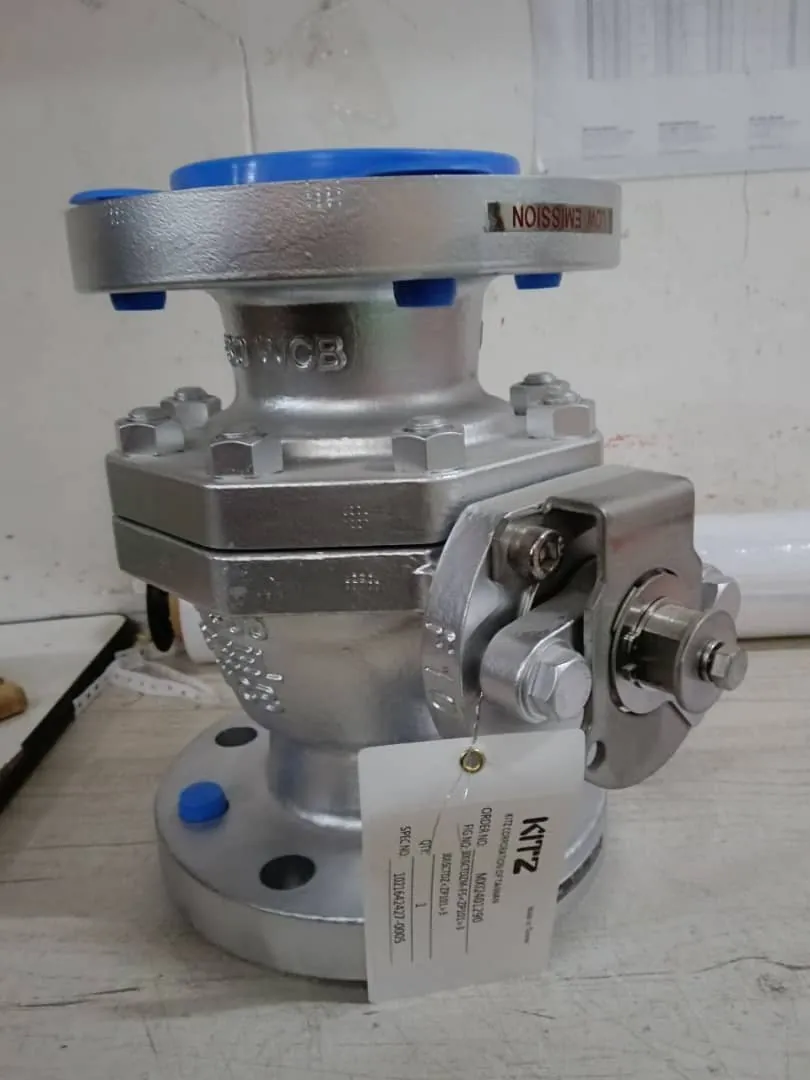
Valve family 03 / 06 · quarter-turn isolation
The ball valve.
A bored sphere between two seats. Ninety degrees of lever between full flow and dead shutoff.
- Motion
- Quarter-turn, 90° lever
- Duty
- Fast isolation, tight shutoff
- Bore
- Full or reduced: specify
- K
- ≈ 0.05 full bore, reference only
A ball valve closes with a quarter turn. A bored sphere rotates between seats, giving fast positive shutoff and clear open-shut indication from the handle. Full-bore designs pass flow with minimal restriction and allow pigging. NF Teguh supplies floating and trunnion-mounted ball valves for Malaysian oil and gas, petrochemical, power, terminal, offshore and natural gas services.
How a ball valve works
The closure member is a sphere with a hole bored through it, held between two annular seats. A quarter turn of the stem swings the bore into line with the pipe, or presents the solid face of the ball to the flow. The pattern is an isolation valve, and sustained throttling chews the seats at the part-open edge.
The geometry buys speed and certainty. One ninety-degree stroke closes the line in a second, and the lever reads open or shut from across the plant. Resilient seats wipe the ball as it turns, giving the drop-tight shutoff the family is specified for. Where a valve is cycled often, interlocked or actuated, the quarter-turn stroke is the point. The multi-turn alternative for undisturbed block duty is the gate valve.
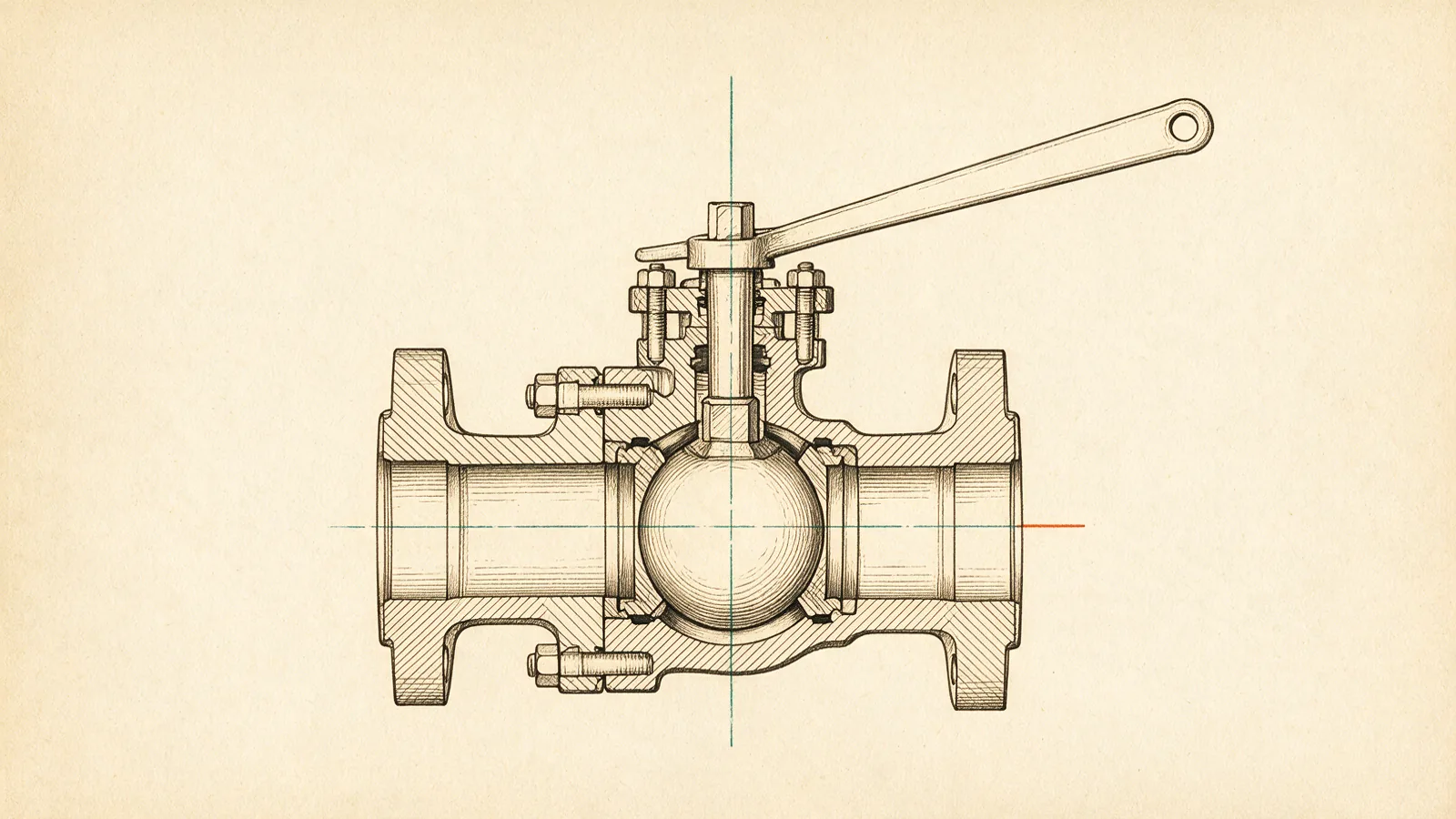
Floating or trunnion-mounted
In a floating design the ball hangs between its seats on the stem alone. Line pressure pushes the closed ball onto the downstream seat, and that push is the seal. It is simple and compact, but the whole pressure load lands on one seat, so seat stress and torque climb with size and class.
A trunnion-mounted ball is pinned top and bottom and cannot drift; spring-energised seats ride forward onto the ball to seal. The load goes into the trunnions, not the seat, so torque stays manageable at large bore and high class. That is why pipeline and high-pressure process valves are trunnion-mounted. The full decision is worked through in trunnion or floating.
Full bore or reduced bore
A full-bore ball carries a hole the same diameter as the pipe: pressure loss is close to nil, and pigs, scrapers and inspection tools pass straight through. That is why pigged pipelines and metering runs specify full bore. A reduced-bore ball is one size smaller through the middle: lighter and cheaper, at a modest extra loss.
Neither is the default: the enquiry has to say which. Where the line will never see a pig, reduced bore saves real money across a project’s valve count. Where it will, the saving is false economy. If the schedule is silent, the counter asks before quoting.
Seats, and what fire-safe means
Soft seats, PTFE and its reinforced grades, give the bubble-tight shutoff ball valves are known for, within their temperature limits. Hotter, dirtier or abrasive services move to metal seats, which trade a little tightness for survival. State the fluid and temperature honestly and the seat choice follows.
Hydrocarbon service adds the fire question. A soft-seated valve caught in a fire loses its seats. A fire-safe design backs them with a secondary metal seat and controls stem and body leakage, so the valve still holds after the PTFE has gone. Fire type-testing is the subject of API 607, and what a spec asks for when it names it, versus API 6FA, is set out in the fire-safe memo.
Standards a ball valve enquiry usually names
BS 5351 covers steel ball valves for the petroleum industries. API 6D is the pipeline valve specification: trunnion-mounted transmission and station valves are ordered against it. API 607 is the fire type test above. API 598 governs shell and seat testing before despatch, and the class markings trace to ASME B16.34, tabulated in the pressure class reference.
Designations are published reference data, not a claim about any particular valve. The governing edition is always the one your purchase order names. Confirm ratings against the manufacturer’s data for the size and seats quoted.
What to state on a ball valve enquiry
NF Teguh supplies floating and trunnion-mounted ball valves from Subang Jaya into Malaysian oil and gas, petrochemical, power, terminal, offshore and natural gas services. Six lines make the enquiry quotable first time:
- Size & pressure class
- End connection: flanged, butt-weld, threaded
- Body & trim material
- Mounting & bore: floating or trunnion, full or reduced
- Operator: lever, gear, actuated
- Test & certification required: fire-safe if the spec asks
- Quote
- From stock or on indent: the quotation states which
- Papers
- Test reports and material certificates on request. Name them on the order.
- Route
- How ordering works, in three steps
- Counter
- Phone, email or WhatsApp