Industry sheet · steam, feedwater & condensate
Power plants.
Steam is the hardest ordinary service a valve sees. Hot, high-pressure, and cycling every start-up.
- Rating
- Class chosen from pressure AND temperature together, per ASME B16.34 tables
- Bonnet
- Pressure-seal construction on high-class steam; bolted below it
- Stem
- OS&Y rising-stem gates dominate isolation duty
- Note
- Published reference designations only. Your PO and the current edition govern
Power plant duty means steam: high temperature, high pressure and thermal cycling, which push valve choices toward cast and forged steels, pressure-seal bonnets and rising-stem gate patterns. NF Teguh supplies gate, globe, ball, butterfly and check valves for Malaysian power plant services, quoted against the line conditions on your specification. This page explains what power plant enquiries usually state and which patterns fit which systems.
What steam duty does to valves
Steam attacks a valve three ways at once. Temperature derates it: every pressure class permits less as the line runs hotter, so a valve chosen from gauge pressure alone is undersized the day it is installed. The class must come from pressure and temperature together, read from the ASME B16.34 tables. Thermal cycling distorts it: every start-up and shutdown works the body and seats, which is why flexible-wedge gates and forgiving seat designs earn their place on steam. And wet steam erodes it: a valve left to throttle when it was built to isolate wire-draws its seating faces in months.
The discipline that answers all three is old and simple. Isolate with valves built to isolate, regulate with valves built to regulate, and rate everything at the real line temperature. The rest of this sheet is that discipline, field by field.
Materials for temperature
Body material follows the temperature the line actually runs. Carbon steel castings and forgings carry feedwater, condensate and lower-temperature steam economically. As steam conditions climb, specifications move to the alloy grades: chrome-molybdenum steels whose strength survives where plain carbon steel’s rating falls away in the B16.34 tables. The material group changes the whole pressure-temperature envelope, which is why the same Class 600 valve permits different duty in different steels.
Trim works harder than the body. Seats and wedge facings on steam are commonly hard-faced, because the alternative is lapping seats at every outage. Stems want materials that hold their finish against the packing at temperature. State the design temperature honestly and the material conversation is short. The arithmetic behind class and temperature is worked through in the pressure class reference.
Bonnet and stem choices
The bonnet joint is where steam pressure tries hardest to leave. Bolted bonnets, a gasketed flange with studs around it, serve the great majority of duty and are simple to maintain. At high pressure the logic inverts into the pressure-seal bonnet: an internal metal gasket that line pressure itself wedges tighter, so the joint seals harder exactly when the duty is hardest. It is the construction high-class steam specifications reach for. Name it on the enquiry when your spec requires it.
On stems, power plant isolation belongs to outside-screw-and-yoke rising-stem gates: threads out of the steam, position visible from the turbine floor at a glance. Why that pattern dominates, and what OS&Y actually denotes, is the subject of the OS&Y memo.
Typical valve selections by system
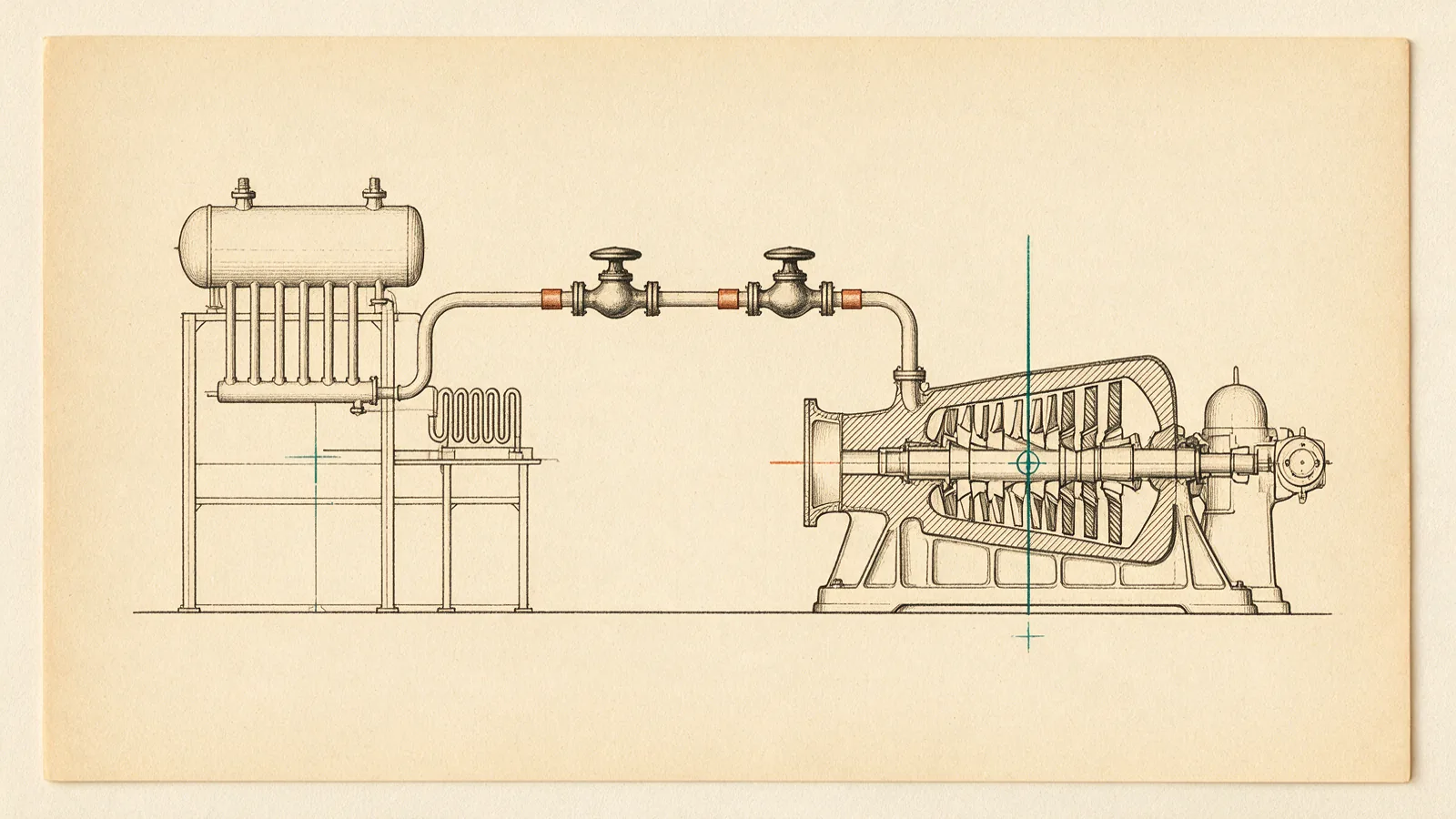
Around the steam cycle the pattern repeats plant to plant. Main steam and hot reheat lines carry gate valves for isolation, rising stem, pressure-seal at the top classes. Feedwater trains pair gates for block duty with globe valves where flow is regulated, and check valves guard every feed pump discharge against reverse flow. Condensate and drain systems run cooler and lighter, so globes and checks at modest class. Cooling water is a different world in the same plant: large bore, low pressure, where butterfly valves do the isolating at a fraction of the weight and cost per inch.
One plant, four regimes, which is why a power plant valve list should say which system each line belongs to. The system names the duty, and the duty names the valve.
What a power plant enquiry states
- Size & pressure class, per line
- Design pressure AND design temperature
- Body & trim material, or the system if unspecified
- Bonnet construction: bolted or pressure-seal, if your spec names it
- End connection: butt-weld is common on steam; state the standard
- Test & certification required
- Why temp
- The class only means something at a temperature. B16.34 derates as the line runs hotter
- Design std
- Name it where your spec does. API 600 for bolted-bonnet steel gates and kin
- Route
- How ordering works, in three steps
- Counter
- Phone, email or WhatsApp
Paperwork this industry expects
Power plant procurement wants its materials proved, because temperature is exactly where an undocumented substitution hurts. EN 10204 3.1 certificates on pressure-retaining parts are the routine ask. API 598 test reports prove the finished valve held tight at test pressure before it shipped. Both are named on the purchase order. The wording, and who issues what, are set out in the procurement documentation guide. Outage schedules add one practical note: state on the enquiry when goods and documents must arrive together, so certificate and crate travel as one delivery.
ASME, API and EN designations on this sheet are published reference data, not a claim about any particular valve. Confirm against the current edition; your purchase order governs.