Valve family 04 / 06 · quarter-turn, tapered plug
The plug valve.
A tapered plug turned a quarter in its body: the oldest valve pattern there is, still specified wherever dirt would defeat the rest.
- Motion
- Quarter-turn tapered plug
- Duty
- Isolation, diverting, slurry
- Care
- Sealant / lift needed to turn
- K
- ≈ 0.3 open, reference only
A plug valve isolates flow with a quarter turn of a tapered or cylindrical plug. Its tight shutoff and in-line maintenance suit dirty and viscous services where a ball or gate valve would suffer. NF Teguh supplies lubricated and sleeved plug valves to Malaysian petrochemical, oil and gas, power, terminal, offshore and natural gas services, against your line specification.
How a plug valve works
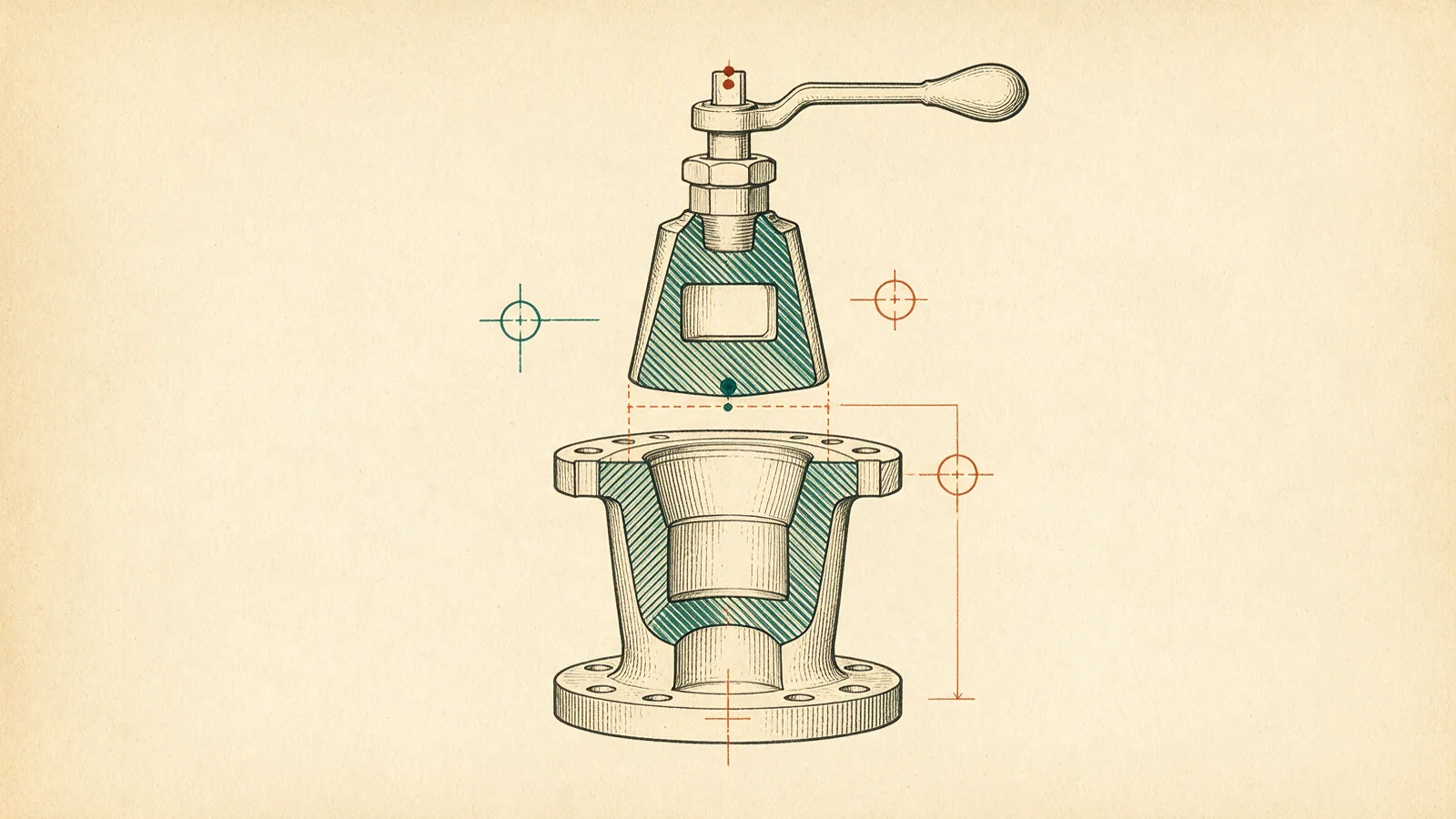
A tapered (sometimes cylindrical) plug sits in a matching body cavity with a port cut through it. A quarter turn aligns the port with the pipe or presents solid metal to the flow. The motion is the ball valve’s; the sealing is not. The plug bears on the body over its whole tapered face, and every stroke wipes that face clean.
That wiping, full-face contact is the pattern’s character. No body cavities for solids to settle in, no exposed seat lips for grit to chew. That is why sludges, slurries and dirty crude keep specifying it where a soft-seated ball would fail. The cost is friction: a tapered plug needs a sealant film or a lift mechanism to turn freely. The next section covers that split.
Lubricated and sleeved designs
A lubricated plug valve carries sealant injected under pressure between plug and body. The film seals the faces, cuts torque, and can be renewed in service through the sealant fitting. The valve is brought back to drop-tight without leaving the line. It handles high pressures and rough media, and asks only for periodic sealant service with a grade matched to the fluid.
A sleeved plug valve replaces the film with a full-face PTFE-type sleeve: no sealant, no service routine, low torque, excellent shutoff, within the temperature and abrasion limits of the sleeve. Chemical and clean-process duty leans sleeved; heavy, hot and dirty duty leans lubricated. State the fluid and temperature and the split usually decides itself.
Where a plug valve beats a ball valve
The two quarter-turn isolation patterns divide on cleanliness. On clean fluids the ball valve is lighter on torque and cheaper at size, and takes the duty. On dirty ones a ball’s cavity packs with solids, its seat edges erode and shutoff decays. The plug’s wiping action and cavity-free bore shrug the same media off. Slurry, sludge, coking services and dirty crude are plug territory by default.
The other advantage is maintenance in place. The cover comes off, the plug lifts out for inspection, lapping or sleeve renewal, and the body never leaves the line. Where breaking flanges means a shutdown, that is the argument that wins the order.
Port patterns and flow
The standard plug carries a rectangular port, a trapezoid cut through the taper, which keeps the plug compact and stiff at a modest cost in flow area. A round-port, full-bore plug passes the pipe’s full section, for scrapers or minimal loss. Multiport plug valves divert flow: a three-way plug on a tank manifold replaces two valves and a tee, and cannot connect the wrong pair of lines.
Standards a plug valve enquiry usually names
Plug valve orders lean on the same framework as the other families. ASME B16.34 sits behind the class marking; what Class 150 or Class 300 permits at temperature is in the pressure class reference. API 598 governs shell and seat testing before despatch; its report is unpacked in the API 598 memo. Pipeline service brings API 6D with it. Material certification to EN 10204 is named on the order like any other line item.
Designations are published reference data, not a claim about any particular valve. The governing edition is always the one your purchase order names. Confirm ratings against the manufacturer’s data for the size and design quoted.
What to state on a plug valve enquiry
NF Teguh supplies lubricated and sleeved plug valves from Subang Jaya into Malaysian petrochemical, oil and gas, power, terminal, offshore and natural gas services. Six lines make the enquiry quotable first time:
- Size & pressure class
- End connection: flanged, butt-weld, threaded
- Body & trim material
- Design (lubricated or sleeved) and port pattern if multiport
- Operator: wrench, gear, actuated
- Test & certification required
- Quote
- From stock or on indent: the quotation states which
- Papers
- Test reports and material certificates on request. Ask on the order, not after delivery
- Route
- How ordering works, in three steps
- Counter
- Phone, email or WhatsApp