API 598 valve testing explained: what a shell and seat test report shows
API 598 is the inspection and testing standard most valve purchase orders cite. It sets shell and seat test pressures, durations and allowable leakage against a valve's class and size. The shell test proves the pressure boundary; seat tests prove shutoff. A report should state test medium, pressure, duration and result. This article explains how to read one, and what API 598 does not cover.
In this memo06 details
Where API 598 sits
API 598 is the inspection and testing standard the valve world defaults to. It does not design valves. Product standards such as API 600 for steel gate valves do that. It says how a finished valve is proven before despatch: which tests apply to which valve types, the pressures and durations read from its tables by size and rating class, the test media allowed, and the leakage each seat construction may show. The report issued against it is the one page in the document pack that speaks about the assembled valve, seats and all; the material certificate speaks only of the metal, as the valve procurement documentation guide lays out.
Every figure on such a report ties back to the standard's tables, so the caveat comes first here: the values below are published reference data, and the governing edition is your purchase order's.
The shell test
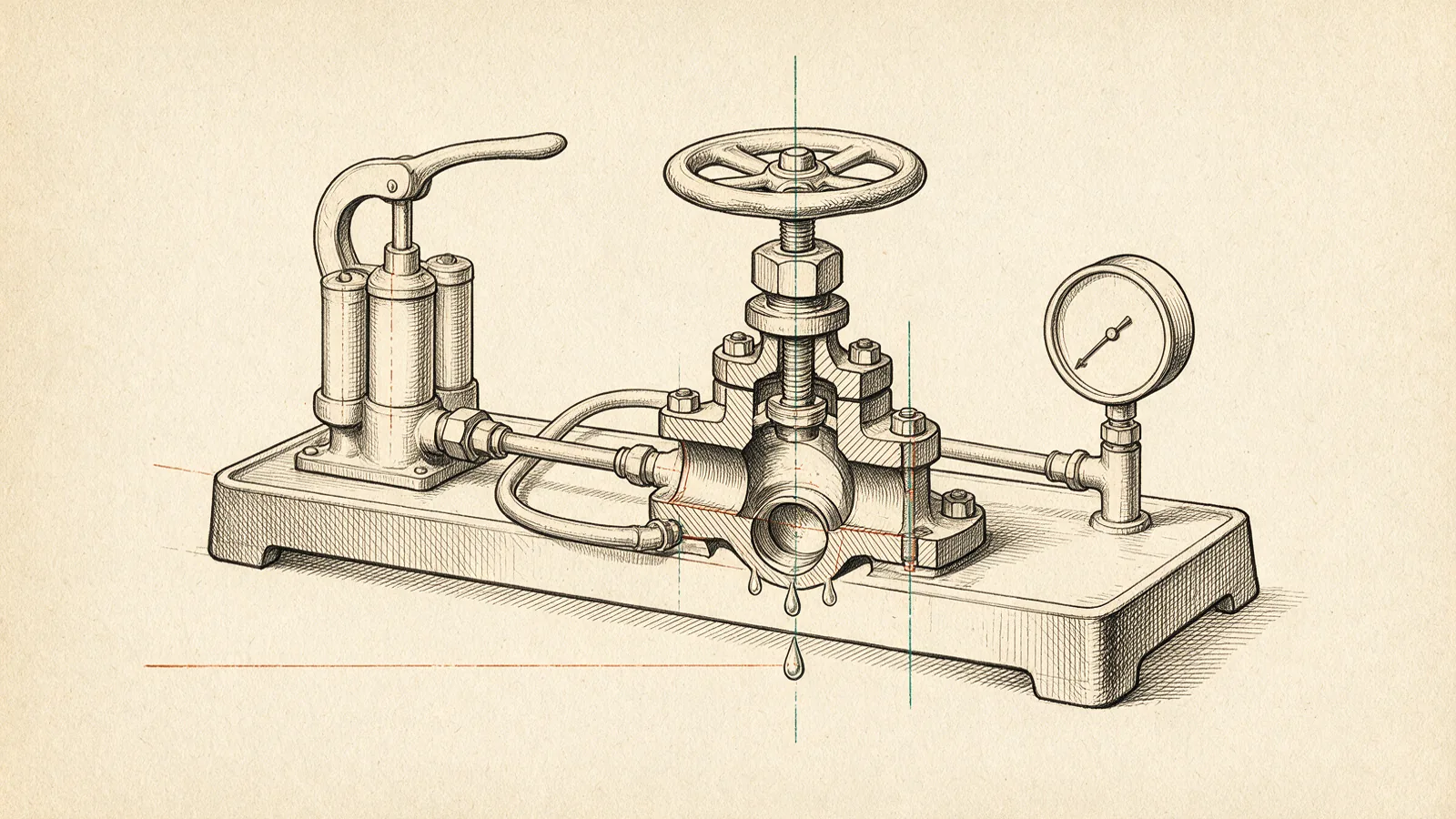
The shell test proves the pressure boundary. The valve is set partly open so that pressure reaches the whole envelope (body, bonnet joint, and the cavity behind the packing) and is pressurised with liquid to the multiple of its rated pressure that the standard's tables state, held for a duration read from the same tables by size. The inspector is looking for what must not happen: visible leakage through the castings, through the body-to-bonnet joint, or past the stem seal region.
A shell test failure is structural, which is why the test comes first and why its line on the report deserves the first glance. A valve can have its seats lapped and retested; a shell that weeps through the wall is not a valve, it is scrap wearing a nameplate.
Seat and backseat tests
Closure tests prove shutoff. With the valve closed and pressure applied across the seat, the downstream side is watched for what comes through. The standard defines a high-pressure closure test and, for the constructions it applies to, a low-pressure closure test with gas: a light, searching medium that finds paths liquid at pressure can mask. Valves with a backseat, such as gate and globe patterns, also get a backseat test with the stem fully raised, proving the seal a maintenance crew will one day rely on when repacking.
Which of these tests a given valve receives is not uniform: the standard's tables assign them by valve type, size and seat construction, and a purchase order can add to the default set, witnessed testing included, where the buyer wants an inspector present rather than a report after the fact. The rows that matter for reading a report are these:
| TEST | VALVE CONDITION | WHAT IT PROVES |
|---|---|---|
| Shell | Partly open, whole envelope pressurised | The pressure boundary: body, joints, packing region |
| Backseat | Stem fully raised (where a backseat is fitted) | The backseat seal on gate and globe patterns |
| High-pressure closure | Closed, pressure across the seat | Shutoff at the table's test differential |
| Low-pressure closure | Closed, gas at low pressure across the seat | Tightness under a light, searching medium |
Allowable leakage in plain terms
Allowable leakage is where reports are most misread. For resilient-seated valves (a soft-seated ball valve, for instance) the standard's acceptance is no visible leakage for the duration of the test. For metal-seated valves it permits a small, counted rate that scales with size: drops of liquid or bubbles of gas per minute, against a column in its tables. A metal-to-metal seat is lapped steel on lapped steel, and the standard is honest about what that achieves.
A metal-seated valve showing the counted drops the tables allow has passed. The report records reality, not perfection.
So a report line reading other than zero is not automatically a concession. Read it against the acceptance column for that seat construction and size before anyone starts a rejection email.
Reading a test report line by line
Start at the identity block: serial number, size, pressure class and figure number, which must reconcile with the plate on the valve. That is the habit the nameplate memo builds. Then the test medium, since liquid and gas tests read differently. Then each test row: pressure against the class (the rating envelope itself is sketched in the ASME pressure class reference), duration against the size, observed leakage against the acceptance column. Last, the date and the inspector's stamp, which turn a table of numbers into a record someone signed.
Done once with the standard beside you, the whole exercise becomes a thirty-second check at goods-inwards, and a considerably shorter conversation whenever an auditor asks how deliveries are verified. Two soft signals are worth adding to the habit: a report whose every observed-leakage entry reads exactly zero across a batch of metal-seated valves invites a question rather than relief, and a report with no serial number at all cannot be tied to any particular valve, which makes it decoration rather than evidence.
What API 598 does not tell you
A clean report says nothing about material. That remains the certificate's job, argued over in the 3.1 vs 3.2 memo. It says nothing about behaviour in a fire, which is the separate test regime of API 607 and API 6FA, and nothing about sour-service compliance under NACE MR0175. Nor does it promise the seat stays tight after years of throttling the valve was never meant to do.
It proves one thing well: the valve that left the works held pressure and shut off, on a bench, on a date, under a named standard. A stockist such as NF Teguh in Subang Jaya keeps that page with the valve it belongs to. The rest of the register lives in Insights.
Related memos
Standards named above are published reference data. Confirm against the current edition; your purchase order governs. Questions: the counter.