Cryogenic valves: what an extended bonnet and BS 6364 mean on a spec
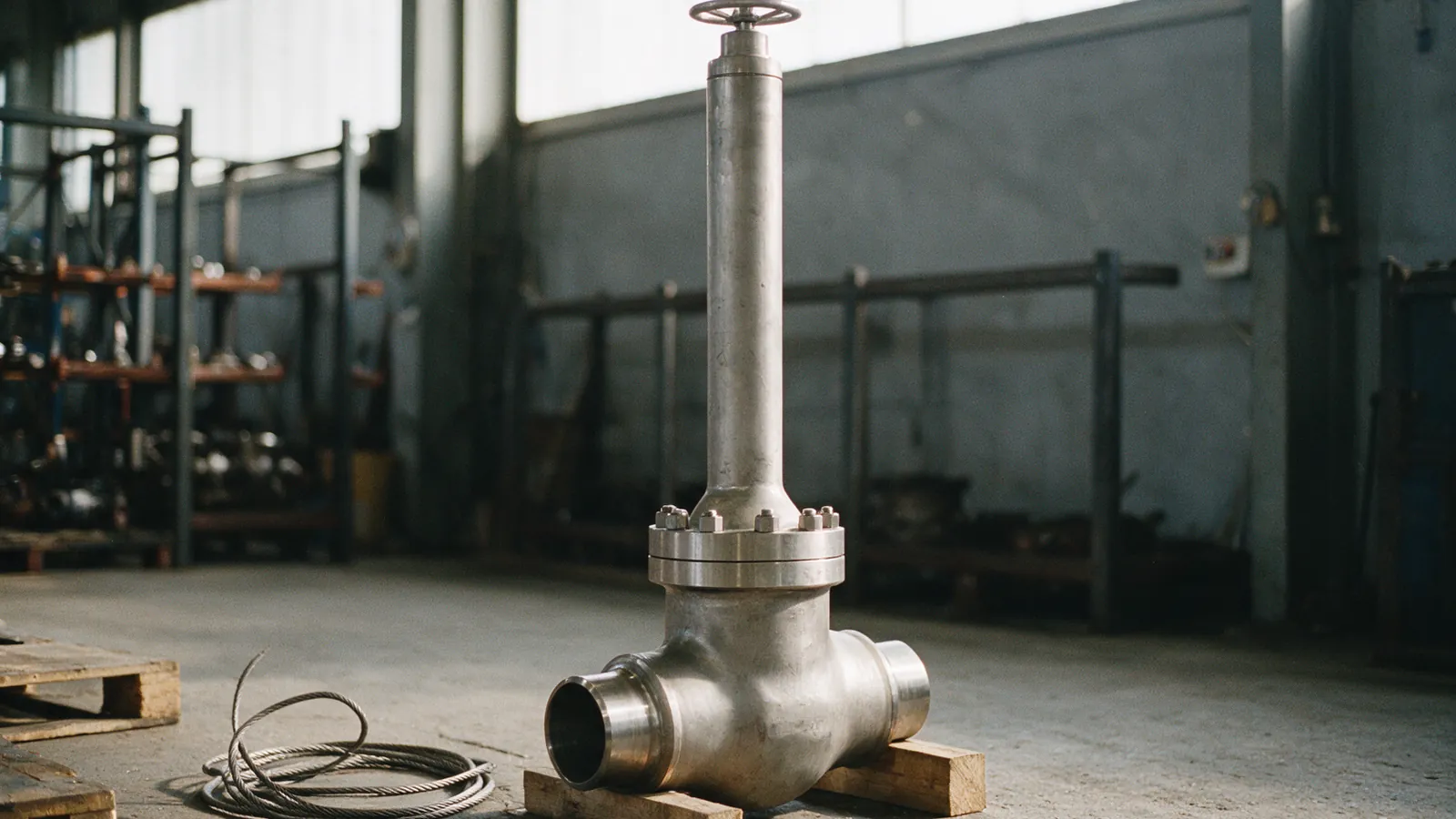
A cryogenic valve is built for liquefied gases such as liquid nitrogen and LNG, and its makers rate it for service below minus 50 degrees C or down to minus 196 degrees C. Its extended bonnet keeps the stem packing and handwheel out of the cold zone. BS 6364 on a line points to a low temperature test, which some makers offer on request.
In this memo09 details
What makes a valve a cryogenic valve?
A cryogenic valve is a valve built for liquefied gases such as liquid nitrogen and liquid oxygen, with an extended bonnet that keeps its stem packing out of the cold. Fluitek, Bonney Forge and Crane, the three makers read for this memo, rate such valves for service below minus 50 degrees C or down to minus 196 degrees C.
Because the makers draw the line in different places, a cryogenic valve line should state the actual minimum design temperature, not just the word "cryogenic". The Fluitek gate valve page published by Philippopoulos names the fluids: cryogenic liquids and gases, such as liquid nitrogen, oxygen, and air separation media
, and the same page names LNG, liquid nitrogen, liquid oxygen and cold box installations.
A cryogenic valve is still a gate, globe or check valve underneath: Bonney Forge offers its cryogenic range as gate and globe valves, and Crane's NOZ-CHEK line is a check valve. The valve families themselves are on our gate valve, globe valve and check valve pages.
| Maker and product | Temperature stated | Documents named |
|---|---|---|
| Bonney Forge cryogenic gate and globe valves | Rated to minus 196 degrees C | Design: API 602, ASME B16.34, MSS SP-134; testing: API 598, MSS SP-134 |
| Crane NOZ-CHEK cryogenic check valves | Down to minus 196 degrees C | ISO 28921, MSS SP-134, Shell 77/200; BS 6364 can also be offered |
| Fluitek extended bolted bonnet gate valve | Below minus 50 degrees C | Low temperature test to BS 6364:1984 Appendix A available |
Why does a cryogenic valve have an extended bonnet?
A cryogenic valve has an extended bonnet to keep the stem packing and the handwheel out of the cold zone, so the packing stays above its rated temperature. The Fluitek product page published by Philippopoulos says the extended bolted bonnet removes the packing and handwheel from the cold zone
, and that this is critical in LNG, liquid nitrogen, liquid oxygen and cold box installations, where icing around the stem can affect operating torque and sealing.
Bonney Forge gives the mechanism in one line: Extended bonnet creates a chamber of insulating vapor to prevent packing from falling below rated temperature.
The long neck is therefore part of the sealing design.
The long neck also takes room. The same product page gives indicative Class 600 heights from valve centre to top of 1138 to 2040 mm for 3" to 12" sizes, and says these figures affect piping support, available space and handling access. How the bonnet joint itself is sealed is covered in bolted bonnet vs pressure seal bonnet.
What does BS 6364 mean on a valve line?
Cryogenic valve makers cite BS 6364 for low temperature testing. Fluitek offers a low temperature test in accordance with BS 6364:1984 Appendix A on its gate valves, and Crane offers its NOZ-CHEK check valves to a BS 6364 leak rate at minus 196 degrees C. Crane says the line can be offered to meet the rigorous requirements of BS 6364 (300 CC/MIN/IN) AS STANDARD at -196°C
, with tighter leak rates available.
The 1984 date on the Fluitek page is the edition that maker cites. Fluitek describes the BS 6364 test as available, so a line that names BS 6364 should say whether the test is wanted, and on how many valves. The 300 cc/min/in figure is Crane's statement about its own check valves.
A shell and seat test at room temperature is a different thing. What a standard pressure test report shows is in our memo on API 598 valve testing.
Which other documents does a cryogenic valve line name?
A cryogenic valve line may also name MSS SP-134, ISO 28921 or Shell 77/200, and each one tells the supplier which design and test rules the valve must follow, so the line should name the document the project specification asks for. Bonney Forge lists MSS SP-134 under both design and inspection and testing for its cryogenic valves, alongside API 602 and ASME B16.34 for design and API 598 for testing.
Crane says its NOZ-CHEK line meets ISO 28921, MSS SP-134 and Shell 77/200, and can also be offered to BS 6364. Because different makers build to different documents, the word "cryogenic" alone does not tell a supplier which one applies.
Bonney Forge's cryogenic range, 1/4 NPS to 2 NPS, names API 602 as a design document; what that standard covers against API 600 is in API 600 vs API 602. Where these documents sit in a full valve specification is in our guide to specifying industrial valves.
What are cryogenic valves made of?
Fluitek builds its cryogenic gate valves in austenitic stainless steels such as CF8 and CF3 or CF8M and CF3M, with metal seats, soft inserts usually based on PTFE, or both. Bonney Forge seals its cryogenic bonnets with a bolted, gasketed joint or a welded joint. The Fluitek description on the Philippopoulos page adds that the build needs extremely accurate machining for the valve to work smoothly in service.
Bonney Forge offers two bonnet designs on its cryogenic valves. Bonney Forge's bolted bonnet uses a male-female joint and a spiral wound gasket in F316L and graphite, with ring joint gaskets on request; its welded bonnet uses a threaded and seal welded joint.
What CF8M and other body material grades mean is in our memo on valve body materials WCB, LCB and CF8M.
What happens to liquid trapped in a cryogenic valve?
Liquid trapped in the body or the bonnet extension of a cryogenic valve can raise the pressure as it warms, so Fluitek provides equalising systems on its cryogenic gate valves to stop fluid being trapped in the body and bonnet extension cavities.
The Philippopoulos product page calls this a key selection point for cryogenic fluids, because trapped liquid can increase pressure during warming. The Fluitek valve's listed configuration is unidirectional, so the flow direction belongs on the order as well.
What should a cryogenic valve line on an enquiry state?
A cryogenic valve line on an enquiry should state the fluid, the minimum design temperature, the design and test documents, and the cleaning, seat and equalising requirements, because each one changes the valve that is quoted and some, like a BS 6364 test, are only supplied when asked for. These seven points cover what the sources read for this memo say to check:
- The valve type and size: gate, globe or check, NPS or DN.
- The fluid, the minimum design temperature and the class.
- The design and test documents the specification names: BS 6364, MSS SP-134, ISO 28921 or an end user's specification, with edition.
- Whether a low temperature test is required, and on how many valves.
- The seat: metal, or a soft insert.
- Any equalising system against trapped liquid, and the flow direction.
- Oxygen service cleaning, a cold box mounting plate, and the end connection.
NF Teguh is a Petronas registered vendor, and gate, globe and check valves are among its six valve families. Send the line and the documents your specification names to the counter on +6012 944 3980, or email sales@nf-teguh.com.my, and we will reply on what we can quote.
What do buyers ask about cryogenic valves?
Can a standard valve with a low temperature body material be used instead?
Not on cryogenic duty. The Fluitek product page published by Philippopoulos says the packing must remain outside the cold zone, which is what the extended bonnet does. A standard bonnet keeps the packing close to the cold, so name an extended bonnet cryogenic valve on the line.
Is a BS 6364 test done on every valve?
Not necessarily. Fluitek describes its BS 6364 low temperature test as available, and Crane says its NOZ-CHEK line can also be offered to BS 6364. State on the enquiry whether the test is required, and on how many valves, so it is priced in from the start.
Can a cryogenic gate valve be used to throttle?
No. The Fluitek product page says its extended bonnet cryogenic gate valve is used for on/off applications, not throttling. Where flow has to be regulated, ask the supplier for a valve type meant for it; Bonney Forge offers cryogenic valves in globe as well as gate configurations.
What extra does oxygen service need?
Oxygen service needs special cleaning. Fluitek says its valves for oxygen service in air liquefaction plants are cleaned and treated to industry requirements, with quantitative verification of how clean they are. Write "oxygen service" and the cleaning requirement on the line, never only the fluid name.
Sources
Read 28 October 2026.
- Bonney Forge, Cryogenic gate and globe valves: bonnet designs, temperature rating, applicable standards and product features.
- Crane ChemPharma and Energy, NOZ-CHEK cryogenic valves: temperature, the standards the line meets and the BS 6364 leak rate offered.
- Fluitek, Gate valve, extended bolted bonnet for cryogenic service, product page published by Philippopoulos: Fluitek's description (service, materials, the BS 6364 low temperature test, oxygen service, cold box mounting, equalising systems) and the page's own notes on the extended bonnet, trapped fluid, dimensions and its FAQ.
No clause, table, test value or requirement text from BS 6364, MSS SP-134, ISO 28921, API 602, API 598 or ASME B16.34 is reproduced here; the details are taken from manufacturers' published pages and summarised. These designations are identifiers only, and no NF Teguh stock, capability or certification claim attaches to any of them. Confirm every line against the current edition. Your purchase order governs.
Related memos
Standards named above are published reference data. Confirm against the current edition; your purchase order governs. Questions: the counter.